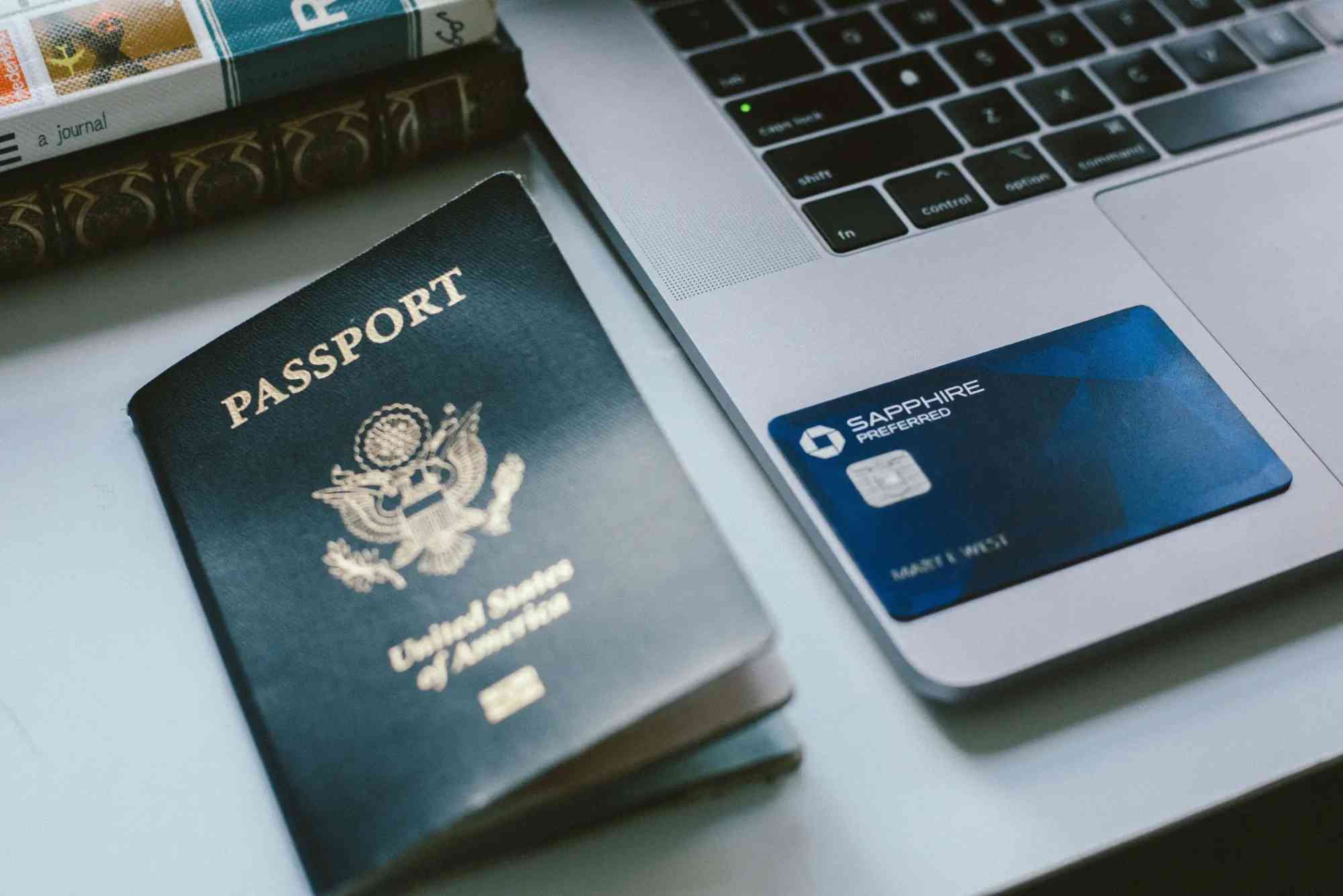
For travellers building a Southeast Asia itinerary — perhaps combining Cambodia with neighbouring Thailand, whose own destinations and travel logistics attract millions of regional visitors annually — understanding Cambodia’s entry costs upfront keeps your trip budget accurate from the start.
Which Nationalities Enter Cambodia Visa-Free
Before calculating any visa cost, it’s worth confirming whether you need one at all. Cambodia maintains visa exemption agreements with a number of countries, primarily within ASEAN. Citizens of the following nations currently enter Cambodia visa-free for stays up to 14 or 30 days depending on the bilateral agreement:
ASEAN member states (Brunei, Indonesia, Laos, Malaysia, Myanmar, Philippines, Singapore, Thailand, Vietnam) enjoy visa-free access for 14–30 days. Several additional countries including Japan, South Korea, China (under specific conditions), and a handful of others have negotiated exemptions or visa-on-arrival access under simplified terms.
For citizens of most Western nations — including the United States, United Kingdom, Canada, Australia, most of the European Union, and a large number of other countries — a visa is required. The good news is that Cambodia’s visa fees are among the most affordable in Asia, and the application process is genuinely accessible.
Cambodia Visa Types Available in 2026
Cambodia offers several visa categories relevant to travellers visiting for tourism, business, or extended stays. Understanding the difference determines both the cost and the correct application route.

| Visa Type | Purpose | Duration | Official Fee (USD) | Extendable? |
|---|---|---|---|---|
| Tourist Visa (T-Visa) | Tourism / leisure | 30 days | $30 | Once (30 days) |
| e-Visa (Online) | Tourism | 30 days | $36 (incl. service fee) | No |
| Ordinary Visa (E-Visa) | Business / work / residence | 30 days | $35 | Multiple times |
| Business Visa (E-Class) | Business, long-term stay | 30 days initial | $35 | 1, 3, 6, 12 months |
| Visa on Arrival (Tourist) | Tourism | 30 days | $30 | Once (30 days) |
Cambodia’s visa fees are denominated in US dollars and paid in USD. Cambodian Riel (KHR) is accepted in some border contexts but USD is the standard for visa transactions. Carry US dollar bills in small denominations — particularly at land border crossings — to ensure smooth payment.
Cambodia e-Visa: Cost, Process, and What’s Included
The Cambodia e-Visa is the cleanest, most recommended entry route for travellers arriving by air at Phnom Penh International Airport, Siem Reap International Airport, or Sihanoukville International Airport. It is applied for entirely online through the Royal Government of Cambodia’s official e-Visa portal (evisa.gov.kh) and costs $36 USD — which includes the $30 tourist visa fee plus a $6 processing service charge.
The e-Visa grants a single-entry tourist stay of 30 days from the date of first entry, not from the date of approval. This distinction matters: if your e-Visa is approved two weeks before your trip, you still get the full 30 days once you land in Cambodia, not 30 days from approval date.
Processing Time and Validity
Standard e-Visa processing takes 3 business days. The approved e-Visa is valid for 3 months from the date of issue, meaning you must enter Cambodia within that 3-month window. If you delay your trip, verify your e-Visa hasn’t expired before travel — you’ll need to apply again if it has.
Documents Required for e-Visa Application
- Valid passport with at least 6 months remaining validity
- Passport-size photograph (4×6 cm, white background, JPEG format under 1MB)
- International credit or debit card for the $36 payment
- Accommodation details for your first night in Cambodia (hotel name and address)
- Return or onward flight ticket information
The e-Visa is delivered as a PDF to the email address you register during application. Print two copies — one to hand to immigration and one to keep. Some immigration officers at Phnom Penh airport specifically ask for a physical printout, so carrying a digital copy only occasionally creates friction.
Cambodia Visa on Arrival: Cost and When to Use It
The visa on arrival (VOA) is available to most nationalities at all major international airports in Cambodia and at several designated land border crossings. For air arrivals, the process is efficient — typically 15 to 30 minutes at dedicated VOA counters — and the official cost is $30 USD for a 30-day tourist visa.
This is $6 cheaper than the e-Visa, but the e-Visa saves time at immigration and eliminates any potential queue at the VOA counter during peak arrival periods. The time-versus-money trade-off depends on your priorities and the volume of traffic on the day you arrive.
Unofficial Charges at Land Border Crossings
Here is the part most travel guides understate: at Cambodia’s land border crossings — particularly Poipet (from Thailand), Bavet (from Vietnam), and Cham Yeam (from Thailand via Koh Kong) — unofficial charges are common. Officials may request “overtime fees,” “processing fees,” or “weekend surcharges” that are not part of the official visa cost. These typically range from $1 to $5 USD.
While these payments are not officially sanctioned, refusing them at a land border can result in deliberate processing delays that most travellers find more frustrating than the small additional cost. Budget travellers crossing by land should carry $30 to $40 USD in cash specifically for the visa process to cover both the official fee and any informal additions without needing to negotiate currency.
Cambodia e-Visa vs Visa on Arrival: Full Comparison
| Factor | e-Visa (Online) | Visa on Arrival |
|---|---|---|
| Official Fee | $36 USD | $30 USD |
| Application Method | Online (evisa.gov.kh) | On arrival at airport/border |
| Processing Time | 3 business days | Immediate (15–30 min queue) |
| Available At | All major airports + some borders | Airports + designated land borders |
| Unofficial Charges Risk | None | Low at airports; higher at land borders |
| Stay Duration | 30 days | 30 days |
| Extendable? | No | Yes (once, for 30 days) |
| Best For | Air arrivals, advance planners | Spontaneous travellers, land crossers |
For most travellers arriving by air with a confirmed itinerary, the e-Visa is the preferable option despite the $6 premium. For those crossing overland or preferring maximum flexibility, the visa on arrival remains perfectly functional at all major entry points.
Cambodia Business Visa (E-Class): Cost for Long-Stay Visitors
The Cambodia Business Visa — officially called the Ordinary E-Class Visa — is the most versatile entry document for travellers intending to stay beyond 30 days, work remotely, or conduct commercial activity in Cambodia. Despite its name, it does not require proof of employment or a formal business purpose and is frequently used by digital nomads and long-stay retirees.
The initial E-class visa costs $35 USD, obtainable on arrival at major airports or through a Cambodian embassy before travel. The real value comes in its extension options, handled through a licensed visa agent in Cambodia after arrival:
| Extension Duration | Typical Agent Cost (USD) | Entry Type |
|---|---|---|
| 1 Month | $45–$55 | Single Entry |
| 3 Months | $75–$95 | Single Entry |
| 6 Months | $150–$175 | Multiple Entry |
| 12 Months | $280–$330 | Multiple Entry |
Extensions are not processed by travellers directly — they go through licensed visa agents (commonly found in Phnom Penh and Siem Reap) who submit paperwork to the immigration department on your behalf. Agent costs are not fixed by the government, so prices vary slightly between providers. The rates above reflect the typical market range in 2026.
Angkor Wat Entrance Fee: Not a Visa, But a Frequent Confusion
One of the most common budgeting errors among first-time Cambodia visitors is confusing the Angkor Archaeological Park entrance fee with a visa charge. They are entirely separate costs.
The Angkor Wat entrance fee in 2026 is:
| Pass Type | Cost (USD) | Validity |
|---|---|---|
| 1-Day Pass | $37 | 1 day |
| 3-Day Pass | $62 | Within 10 days |
| 7-Day Pass | $72 | Within 30 days |
The Angkor Pass is purchased separately at the official ticket office near Angkor Wat — not included in your visa. Budget travellers should account for this as a significant separate cost when planning their Siem Reap visit. The 3-day pass represents the best value for most tourists who want to explore the full temple complex without rushing.
Total Budget for a Cambodia Trip: Visa Costs in Context
Visa fees are just one component of the total cost of visiting Cambodia. Understanding how they fit into the broader travel budget helps prioritise where to save and where to spend.
| Expense Category | Budget Range (USD per person) | Notes |
|---|---|---|
| Cambodia e-Visa | $36 | One-time, 30-day tourist |
| Angkor Wat (3-day pass) | $62 | Siem Reap visitors only |
| Budget accommodation | $8–$25/night | Hostels to mid-range guesthouses |
| Mid-range accommodation | $30–$80/night | 3-star hotels in Phnom Penh/Siem Reap |
| Daily food (local) | $5–$15/day | Street food and local restaurants |
| Local transport | $5–$20/day | Tuk-tuks, ride apps, buses |
| International flights | Varies significantly by origin | Budget separately by route |
Cambodia remains one of the most affordable countries in Southeast Asia for daily costs. The visa fee — whether $30 or $36 — is a minor component of the total trip budget, particularly for travellers from higher-cost origin countries. The more significant financial decisions in Cambodia are accommodation choice, Angkor Pass duration, and whether to take domestic flights between cities or travel overland.
Beware of Fake Cambodia Visa Websites
One of the most consistent problems Cambodia travellers report is accidentally applying through unofficial third-party websites that impersonate the Cambodian government’s official e-Visa portal. These sites charge inflated fees — sometimes $60 to $100 or more — for the same visa that costs $36 directly from the government.
The only official Cambodia e-Visa website is evisa.gov.kh, operated by the Royal Government of Cambodia’s Ministry of Foreign Affairs and International Cooperation. Any other website offering “Cambodia e-Visa” services is a private intermediary charging a premium for a service you can do yourself at the official price. The visa document you receive will be the same — but the cost will be substantially higher than necessary.
Verify the URL carefully before entering your passport or payment details. The official site uses a .gov.kh domain, which is Cambodia’s government domain extension. Sites using .com, .net, or other commercial domains are not official government portals.
Cambodia Visa Extension: Can You Stay Longer Than 30 Days?
Tourist visa holders (T-Class) can extend their stay once for an additional 30 days at a cost of approximately $45 to $55 USD through a local visa agent. The extension must be initiated before the original visa expires — not after. A 30-day tourist visa extended once gives a maximum continuous stay of 60 days.
For stays beyond 60 days, the Business E-Class visa is the appropriate route. Attempting to extend a tourist visa a second time is not possible under current Cambodia immigration rules — travellers who’ve exhausted their tourist visa extensions must either exit and re-enter or switch to an E-Class visa, which requires additional documentation but offers substantially longer residency options.
Overstaying a Cambodia visa carries a fine of $10 per day — one of the lower overstay penalties in Southeast Asia, but still an unnecessary cost that compounds quickly on longer unplanned stays.
Cambodia Visa for Children: Are Fees Different?
Children travelling on their own passport pay the same visa fees as adults — $30 for visa on arrival or $36 for the e-Visa. There is no child discount or reduced-fee category for Cambodia’s standard tourist visa.
Children listed as additional holders within a parent’s passport (where this practice is still operative) may be covered under the parent’s visa in some cases, but this depends on the issuing country’s passport convention and Cambodia’s acceptance thereof. Modern international travel generally requires each traveller — including infants — to hold their own travel document. Families should budget $36 per person for e-Visas regardless of age when planning the total entry cost.
Cambodia vs Thailand Visa Cost: How They Compare for Southeast Asia Travellers
Many visitors to Cambodia include Thailand as part of the same regional trip — the overland crossing between the two countries at Poipet/Aranyaprathet is one of the busiest land borders in Southeast Asia. Understanding the visa cost difference between the two destinations helps budget the combined trip accurately.
| Country | Tourist Visa Fee | Visa-Free Countries | Visa on Arrival Available? | e-Visa Available? |
|---|---|---|---|---|
| Cambodia | $30–$36 | ASEAN + select others | Yes ($30) | Yes ($36 via evisa.gov.kh) |
| Thailand | $35 (visa on arrival) | 60+ countries (visa-free) | Yes ($35) | Yes (Thailand e-Visa) |
| Vietnam | $25 (e-visa) | 25+ countries (visa-free) | Yes (at airports) | Yes ($25) |
| Laos | $30–$42 (VOA) | ASEAN + select others | Yes | Limited |
Cambodia’s visa pricing is competitive within the Southeast Asian region. Travellers combining a Cambodia visit with Thailand should budget separately for each country’s entry requirements — and verify current visa-free status for their specific passport, as bilateral agreements change periodically. Travellers exploring Thailand’s markets and cities alongside a Cambodia trip will find that markets in Chiang Mai and other Thai destinations add distinct cultural experiences that complement Cambodia’s temple and river tourism.
How to Apply for Cambodia e-Visa: Complete Step-by-Step Process
- Step 1: Go to the official Cambodia e-Visa portal at evisa.gov.kh. Verify the .gov.kh domain before proceeding.
- Step 2: Click “Apply for e-Visa” and create an account or proceed as a guest applicant.
- Step 3: Complete the application form with your full name (as shown in passport), nationality, passport number, intended entry date, and accommodation details.
- Step 4: Upload your passport photograph (4×6 cm, white background, JPEG, under 1MB) and a clear scan of your passport bio-data page.
- Step 5: Pay the $36 USD fee using a Visa, Mastercard, or American Express international card. Prepaid travel cards and some debit cards are accepted but confirm compatibility before starting.
- Step 6: Receive your e-Visa approval by email within 3 business days. Download and print two copies of the approval document.
- Step 7: At Cambodia immigration, present your printed e-Visa approval alongside your passport. You will be processed through the e-Visa lane, which is typically faster than the visa-on-arrival queue.
Frequently Asked Questions About Cambodia Visa Prices
Does Cambodia charge the same visa fee for all nationalities?
Yes — the standard tourist visa fee of $30 (visa on arrival) or $36 (e-Visa) applies uniformly regardless of nationality for countries that require a visa. There are no nationality-based premium charges for standard tourist entry, unlike some countries that apply reciprocal fee structures.
Can I pay for my Cambodia visa in Thai Baht or Vietnamese Dong at land borders?
Officially, Cambodia’s visa fees are in US dollars. At some land border crossings, officers may accept Thai Baht or Vietnamese Dong in equivalent amounts, but exchange rates applied at the counter are typically unfavourable. Carrying exact USD amounts is strongly recommended to avoid currency conversion losses.
Is travel insurance required to obtain a Cambodia visa?
Travel insurance is not a mandatory requirement for the Cambodia e-Visa or visa on arrival in 2026. However, Cambodia’s private healthcare costs can be significant, and medical evacuation fees from rural areas can be very high. Comprehensive travel insurance covering medical expenses and evacuation is strongly recommended for all Cambodia visitors regardless of visa type.
Can I get a Cambodia visa at Bangkok’s Suvarnabhumi Airport in transit?
No — the Cambodia e-Visa must be applied for before travel through the official online portal, and the visa on arrival is issued at Cambodian entry points, not at Thai airports. If you’re transiting through Bangkok en route to Cambodia, apply for your e-Visa before departure to ensure smooth entry upon arriving in Phnom Penh or Siem Reap.
What happens if my Cambodia e-Visa expires before I travel?
The e-Visa is valid for 3 months from the date of issue. If you’ve applied more than 3 months ahead of your travel date, or if your trip has been delayed, your e-Visa may expire before you use it. You’ll need to apply for a new one at an additional $36 cost. There is no refund or extension for unused, expired e-Visas.
Conclusion: What Cambodia Visa Actually Costs in 2026
The price of a Cambodia visa in 2026 is refreshingly straightforward compared to many international destinations. The official cost is $30 for a visa on arrival or $36 for an e-Visa applied online — both granting 30 days of tourist access. Additional costs to budget for include the Angkor Wat entrance fee (separate from visa), a one-time extension fee of $45–$55 if you need more time, and the potential for small unofficial charges at land borders that are easier to accommodate than resist.
The biggest avoidable cost in the Cambodia visa process is using a third-party website instead of the official evisa.gov.kh portal — a mistake that can add $30 to $70 in unnecessary fees for exactly the same document. Apply directly, carry US dollars, and check your passport validity before you travel.
For travellers building a broader Southeast Asia trip budget — whether incorporating the beaches of Thailand, the street food culture of Bangkok, or the cultural richness of Angkor — Cambodia’s visa fees are one of the more predictable line items in your planning. To help round out your regional trip planning, travel tips and tricks for Southeast Asia cover the practical details that keep itineraries running smoothly across multiple borders and destinations.
Cambodia rewards travellers who plan correctly. The visa process, at its core, is not complicated — and now you have everything you need to navigate it without overpaying.